HomeShiba InusSunojo ShibasSunoJo Breeding ProgramWhat's New... |
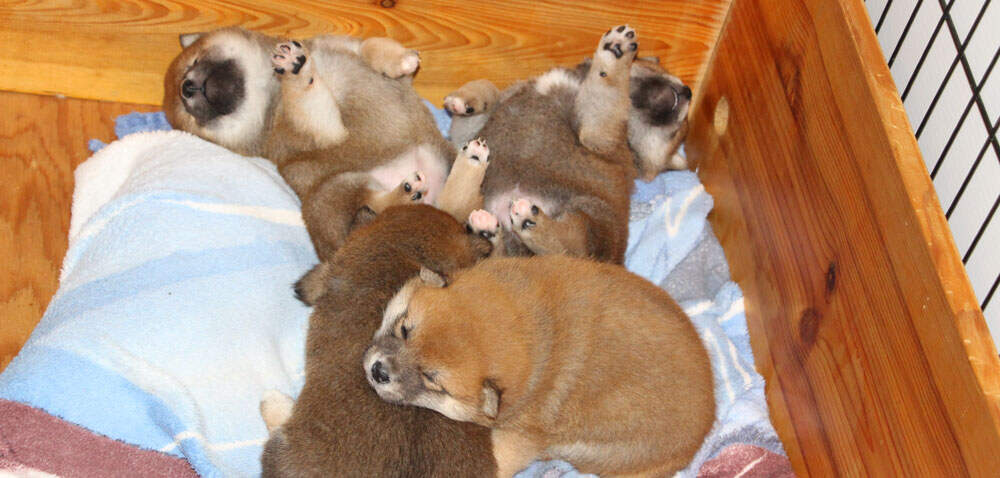
What Is A Shiba Inu?Introducing the Shiba Inu The Shiba Inu was developed in Japan, to flush birds and small game and occasionally used to hunt wild boar. Now they are primarily kept as pets, both in Japan and the US. Quite possibly, a Shiba puppy is the most appealing of any of the dog breeds. It has been said that a Shiba looks like a live teddy bear. But the Shiba is not a toy - it is a very lively little dog with a unique set of characteristics. Each one is a individual with his/her own personality, but there are some traits that are considered typical of the breed. A Brief History of the Shiba Inu Around 7000 BC the ancestors of today's Japanese breeds accompanied the earliest immigrants to Japan. Archaeological excavations of the shell-mounds left by the Jomonjin show that they had small dogs in the 14.5 to 19.5 inch range. In the third century BC, a new group of immigrants brought their dogs to Japan. These dogs bred with the descendants of the Jomonjin dogs, and produced canines known to have pointed, erect ears and curly/sickle tails. In 7 AD, the Yamato Court established a dogkeeper's office which helped maintain the Japanese native breeds as an integral part of Japanese culture. Although the country was closed to foreigners from the 17th through 18th centuries, some European and Chinese dogs were imported and crossed with native dogs living in the more populated areas. Dogs in the countryside, however, remained relatively pure. From the original Japanese native dogs, six distinct breeds in three different sizes developed. They are the Akita (large size); Kishu, Hokkaido, Shikoku, Kai (medium size); and the Shiba (small size). World War II nearly spelled disaster for the Shiba and the other breeds, and most of the dogs that did not perish in bombing raids succumbed to distemper during the post-war years. After the war, Shibas were brought from the remote countryside and breeding programs were re-established. The remnants of the various bloodlines were combined to produce the breed as it is known today. Physical Characteristics The Shiba is a very proportionate dog with a height to length ratio of 10 to 11. Males run from 14.5 to 16.5 inches tall, with females ranging from 13.5 to 15.5 inches.Height over the upper limits is a disqualification.The weight varies according to height up to about 25 pounds. It is a medium boned, moderately compact and well muscled dog with a generally spitz-like appearance. Because of its hunting heritage, it should be quick, agile and able to turn on a yen. It has a dense double coat: a soft, wooly undercoat with coarse guardhairs. Red, red sesame, and black & tan are the preferred colours. White/cream shadings are present on the legs, belly, chest and part of the face and tail - this is referred to as "urajiro". Temperament With black button nose, little pricked ears and a curly tail, the Shiba enters the world knowing he is a superior being. Whether with intrepid boldness, squinty-eyed cuteness or calm dignity, he is KING. The Japanese have three words to describe the Shiba temperament. The first word is "kan-i" which is bravery and boldness combined with composure and mental strength. The opposite of "kan-i" is "ryosei" which means good nature with a gentle disposition. One cannot exist without the other. The charming side of the Shiba is "soboku" which is artlessness with a refined and open spirit. They combine to make a personality that Shiba owners can only describe as "irresistible"! If a Shiba could utter one word, it would probably be "mine". It is "mine" food, "mine" water, "mine" toys, "mine" sofa, "mine" crate, "mine" car, "mine" owner, and "mine" world. Sharing is a concept he feels others should practice He doesn't want you to forget those wonderful things your mother taught you about generosity! If the bait is dangled when a potential Shiba owner sees adults at a dog show or pictures in a magazine, the hook is set when he encounters his first puppy! Exemplary examples of canine cuteness, fiery little fuzzballs-from-hell, no words can describe the appeal of the infant Shiba. A litter of Shibas is a Dakin convention and a school of piranha; strutting, posturing little windup toys! The adult Shiba is far from a toy; and takes the "spirited boldness" part of his temperament quite seriously. Early socialization is mandatory for the young puppy. Most Shiba owners learn to deal with the difficult aspects of the dog's temperament in order to enjoy the delightful ones. With "soboku", the Shiba sets his hook into the heart. This is "artlessness" with squinty-eyes, airplaned ears, and a vibrating tail. It is "charm" standing in your lap washing your ears, and "dignity" plus "refinement" born of the knowledge of superiority. Health As a breed, Shibas can rightfully be described as sturdy, healthy little dogs, able to withstand the rigors of outdoor life as well as enjoying the comfort of indoor dwelling. They are easy keepers, and can run for miles with an athletic companion or take their exercise chasing a tennis ball around the backyard. Their catlike agility and resilience provide good resistance to injury, and the "natural" size and symmetrical proportions lessen susceptibility to conditions caused by structural imbalance. Despite these assets, Shibas do have some hereditary defects which all reliable breeders screen for in their breeding stock. Patellar luxation is common in toy breeds and sometimes appears in Shibas. It causes loose kneecaps and is usually not severe enough to be detrimental to a Shiba's life, but should not be bred. An experienced veterinarian can detect this condition by palpation. Hip dysplasia occasionally occurs - mild dysplasia will not show any adverse clinical effects and the dog will lead a normal life; but again, should not be part of any breeding program. Eyes should be checked eyes for hereditary eye defects; few are severe enough to cause blindness or interfere with a dog's life, but dogs with eye defects that are potentially blinding should not be bred. A smattering of other defects have been reported, but none in numbers to cause concern at this time.
|